Isn't schooling intended for all?
Yet, how often do you see a specially-abled person learning alongside you?
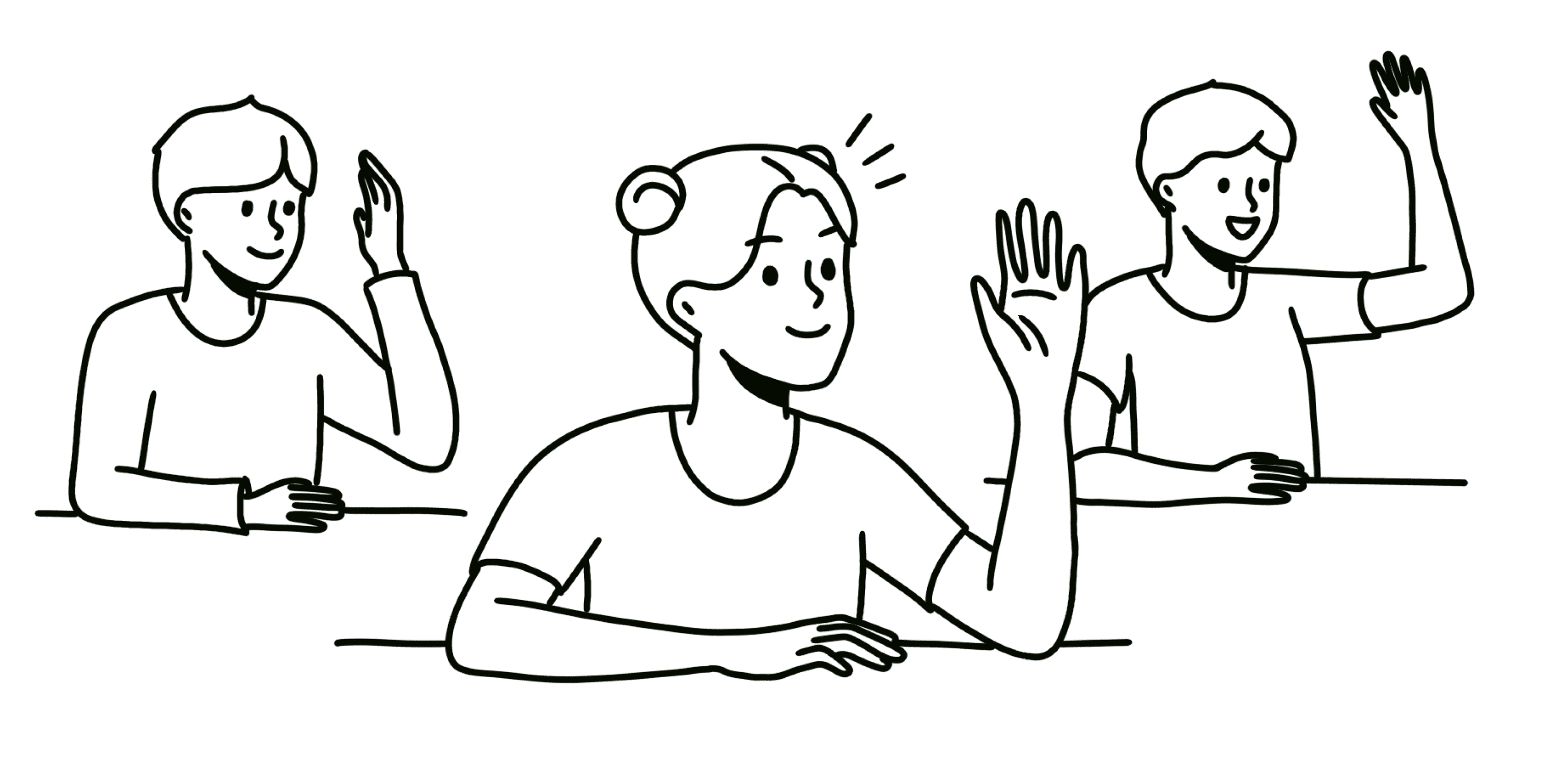
Project Brief
This project bridges the educational gap for children born deaf through an inclusive learning platform. Since traditional education is heavily speech-driven, deaf students face significant disadvantages.
By integrating visual and sign language methods, this platform ensures equal learning, fostering cognitive growth, engagement, and self-expression.
Project Name
MiMiC
Project Type
UX Research, UI Design
Subject Category
Education for students with hearing disability
Qualitative Research
A world without sound
Imagine entering the world in silence, where the laughter of a loved one or the soothing lullaby of a mother is just a visual cue.
Language Understanding
For children born with congenital deafness, “language is not an automatic acquisition—it is a challenge they must consciously overcome.”
Unlike their hearing peers, they do not absorb language naturally, impacting their ability to process concepts, communicate, and navigate social spaces.
What is Congenital Deafness?
Congenital deafness in children refers to a child being born with hearing loss, meaning the deafness was present at birth.
Reasons For This
-Genetic factors inherited from parents
-Infections during pregnancy (cytomegalovirus or rubella)
-Other complications during pregnancy
but what if deafness is not detected earlier?
Newborn hearing screenings are crucial for early detection for deafness , enabling timely intervention and support.
Language Affecting Education
Education is a fundamental gateway to opportunity, yet deaf students often face significant learning delays due to inaccessible teaching methods.
Unlike their hearing peers, they require additional time and structured interventions to grasp academic concepts, leading to an unequal learning experience.
How Exactly Does it Affect?
Despite using the same textbooks as hearing students, deaf learners struggle with basic reading and writing at an age when their peers are advancing to complex subjects.
A 6th-grade deaf student may still be mastering alphabets and numbers, highlighting the urgent need for tailored educational frameworks.
The Educational Gaps
Specific problems affecting the learning and development of deaf individuals in their growth.
Grasping Similar Words
Struggle to distinguish between similar sounding words (eg., ch/sh, bat/mat, etc), making phonetic learning difficult.
Concentration Problems
Difficulty maintaining focus during difficult tasks, affecting their learning and comprehension.
Thinking Process
Struggle with higher-order thinking, like grasping abstract ideas, or solving complex math problems.
Limited Studying Resources
Limited exposure to structured language systems resulting in slower reading and writing development.
Restricted Vocabulary Growth
Difficulty in mastering basic grammar and expanding vocabulary due to inadequate language reinforcement.
Cognitive Overload
Cannot retain too much information at once, making tasks like following directions or memorising lists difficult.
Quantitative Research
How it affects the child’s development
The education barriers faced by deaf students have long-term impact on their personal and professional growth.
Delayed Language & Cognitive Development
“A respondent who lacked early language support struggled with reading comprehension and abstract concepts, making learning difficult.”
Inadequate Learning Materials
“One respondent mentioned that learning materials often used complex English, making it difficult for deaf students to understand.”
Social Isolation & Communication Barriers
“One of the responses was, he finds it difficult to keep up with conversations in a group of hearing people. By the time he understands the topic, it has already changed, making it hard for him to fully engage. As a result, he often feels left out.”
Limited Career Opportunities
“An individual shared how they had to rely on extensive self-study to qualify for employment, as formal education did not provide sufficient learning support.”
Proficient English Learning
“Learning proficient English was a problem due to complex english explanation and structured education impacting academic performance.”
Introducing MiMiC,
an educational platform for them
Newborn hearing screenings are crucial for early detection for deafness , enabling timely intervention and support.
Functions of the application
What does it do?
It creates an engaging learning experience that helps deaf students understand subjects more effectively.
Addressing Educational Barrier
Lack of resources in deaf schools hinders children from accessing the same quality education as their hearing peers.
Self-Learning Empowerment
Children can learn independently from an early age, enhancing their cognitive thinking, communication skills, and overall educational growth.
Visual & Sign Language Integration
Develops sign language skills through visual aids and gestures, fostering critical thinking and effective communication.
Equal right to education
Every child, regardless of their abilities, deserves quality education, and MiMiC ensures accessibility for deaf children
Interactive Learning Experience
It provides a strong educational foundation through engaging and immersive methods.
Ideations
Process behind the creation of mimic
Before finding the solution, we explored real challenges deaf students face, uncovering gaps and refining ideas for a more inclusive education.

can’t think of anything!
designer block
blank!!!!
what more??
let’s discuss with others
nothing is working out!
Ideation 1
Explored board games, card games, and puzzles, for subjects like math.
Constraint: Varying educational understanding may make it difficult for some to grasp complex game rules.
Ideation 2
Considered games like Charades, where children act out words in sign language
Constraint: Children unfamiliar with sign language may struggle to participate, limiting the game's accessibility to a specific group.
Eureka Moment!!!
Building on the concept of Charades, this approach creates a strong educational foundation by integrating sign language, visual cues, word association, and English language development for effective learning and growth.
Low Fidelity Wireframes
A glimpse of the artwork before colouring it
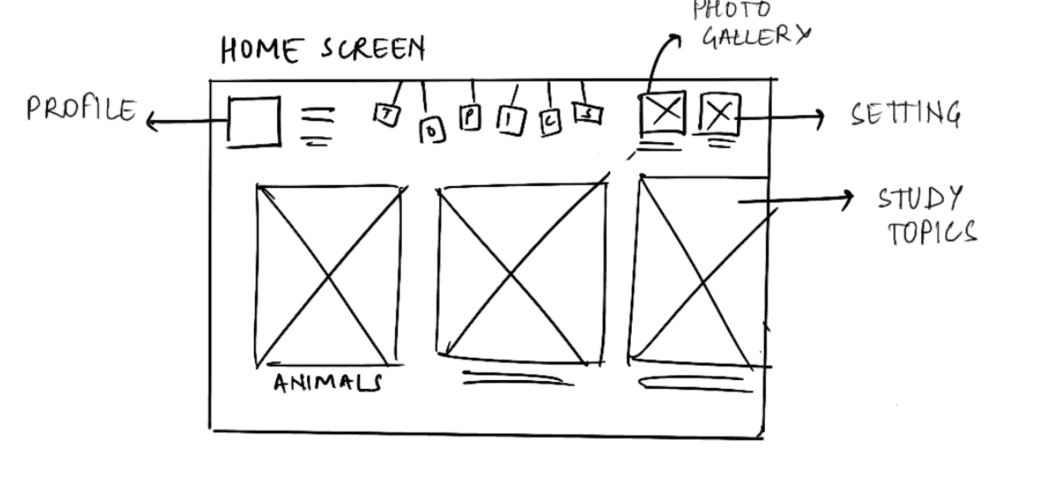
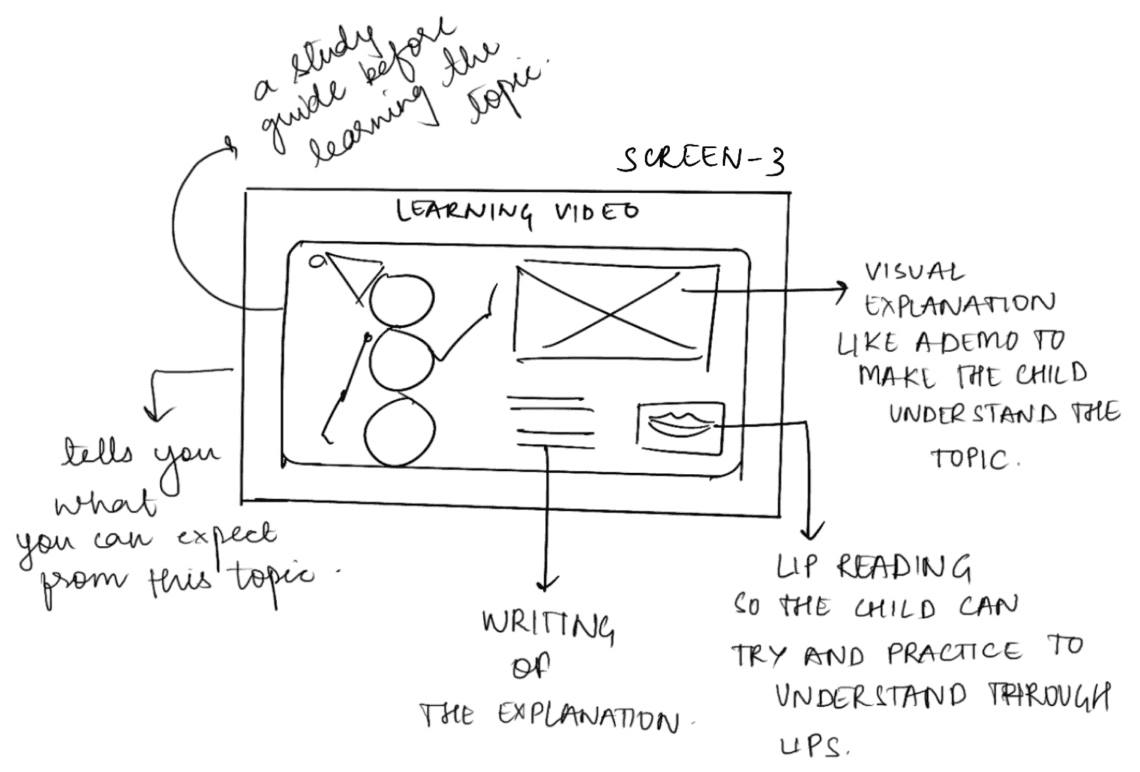
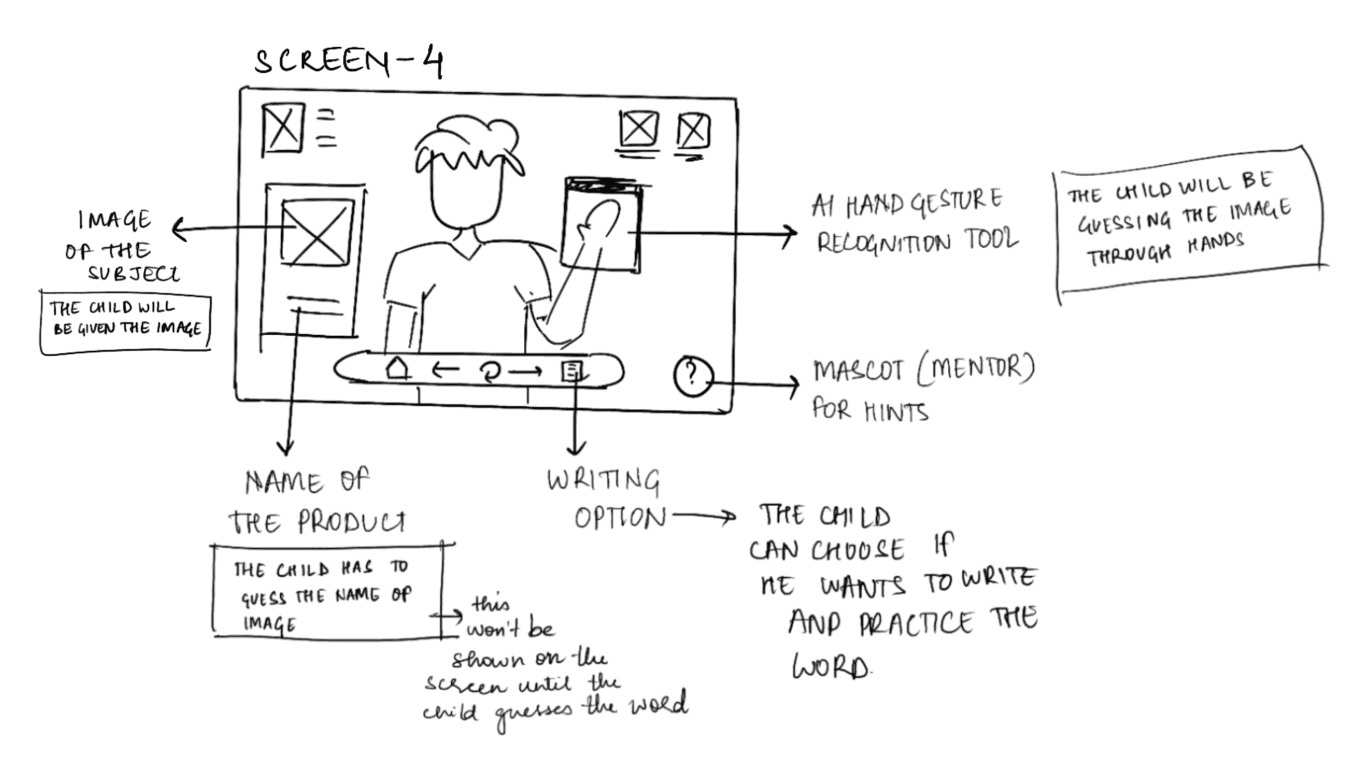
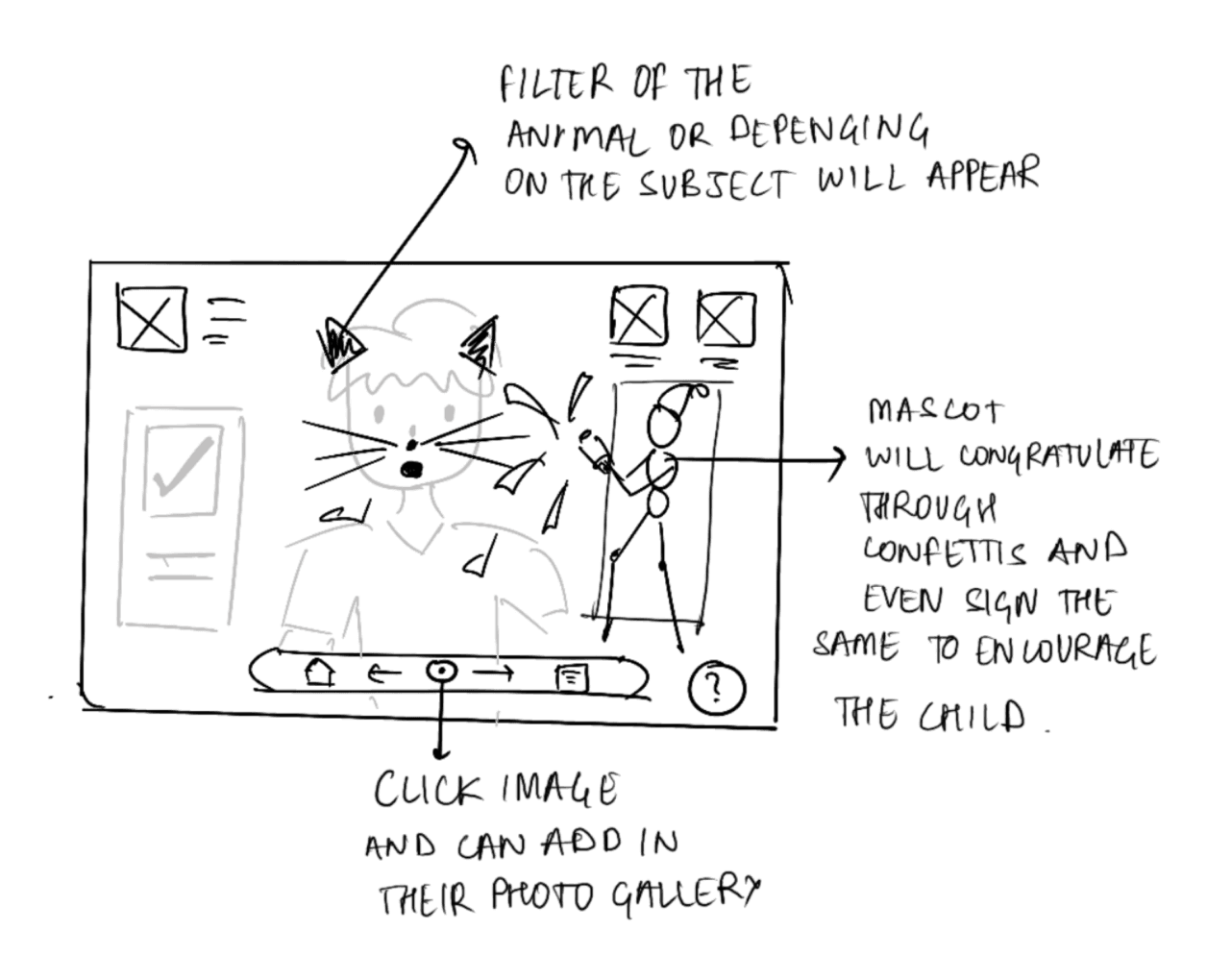
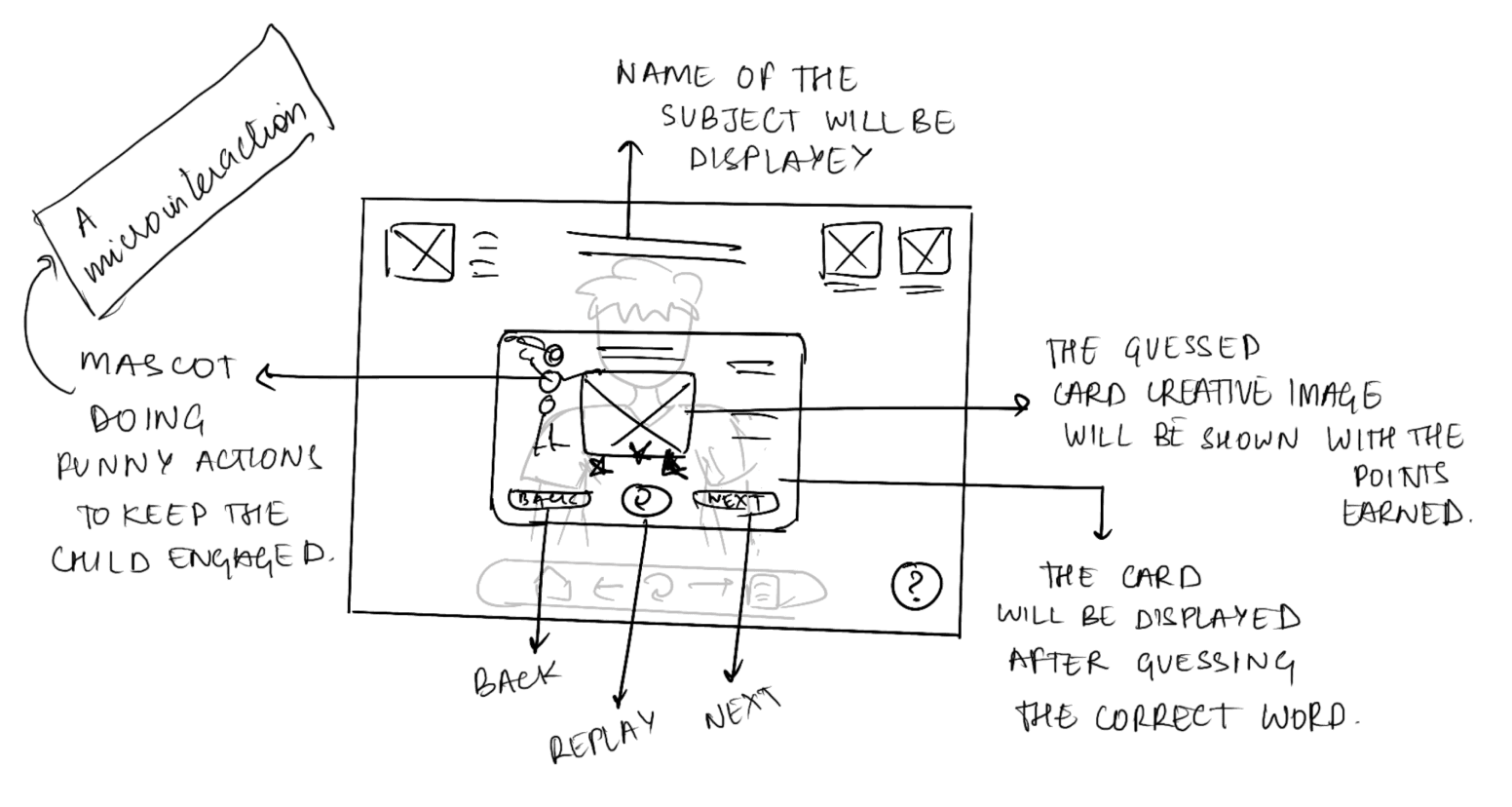
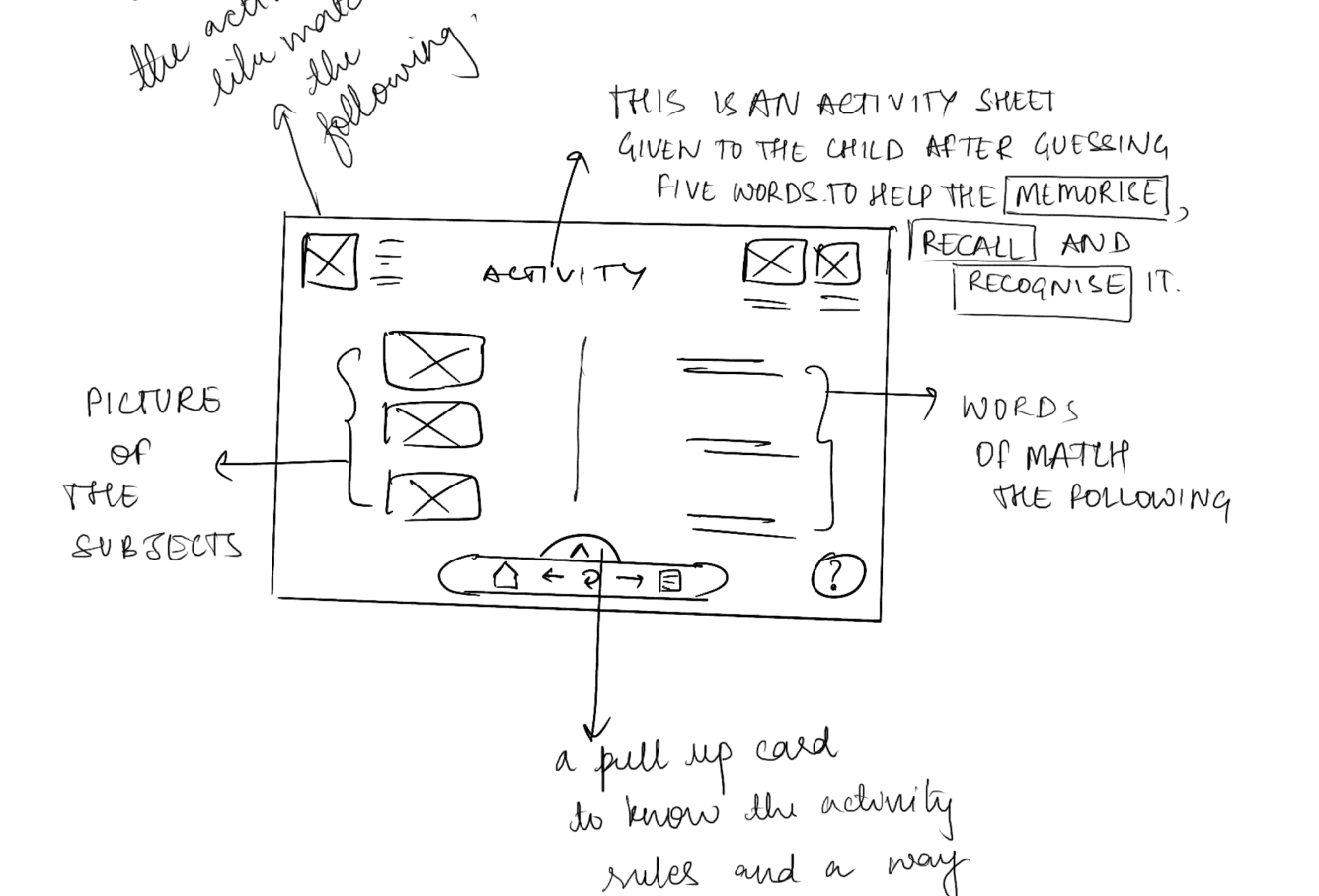
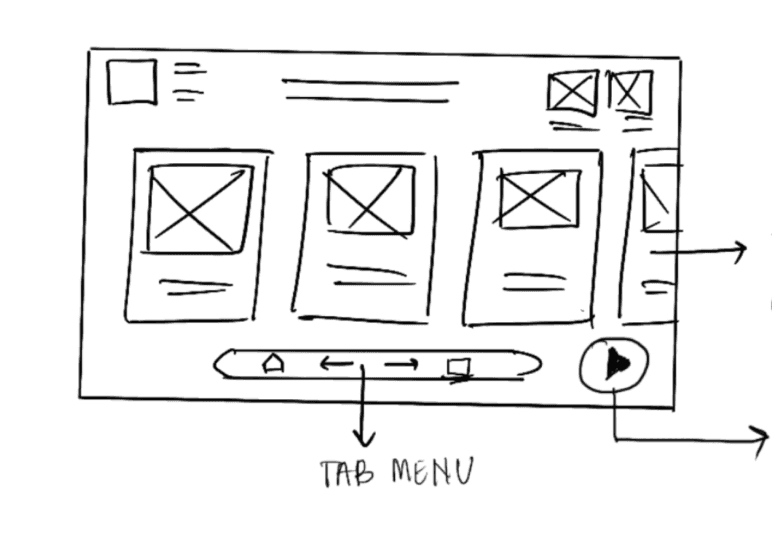
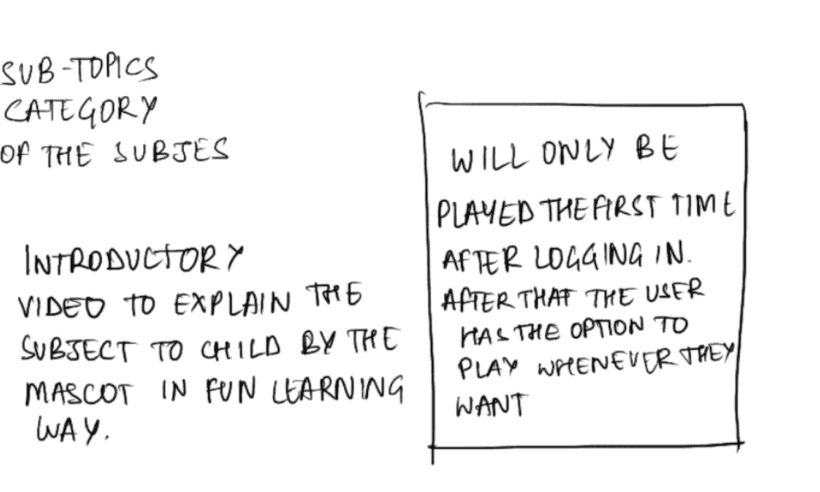
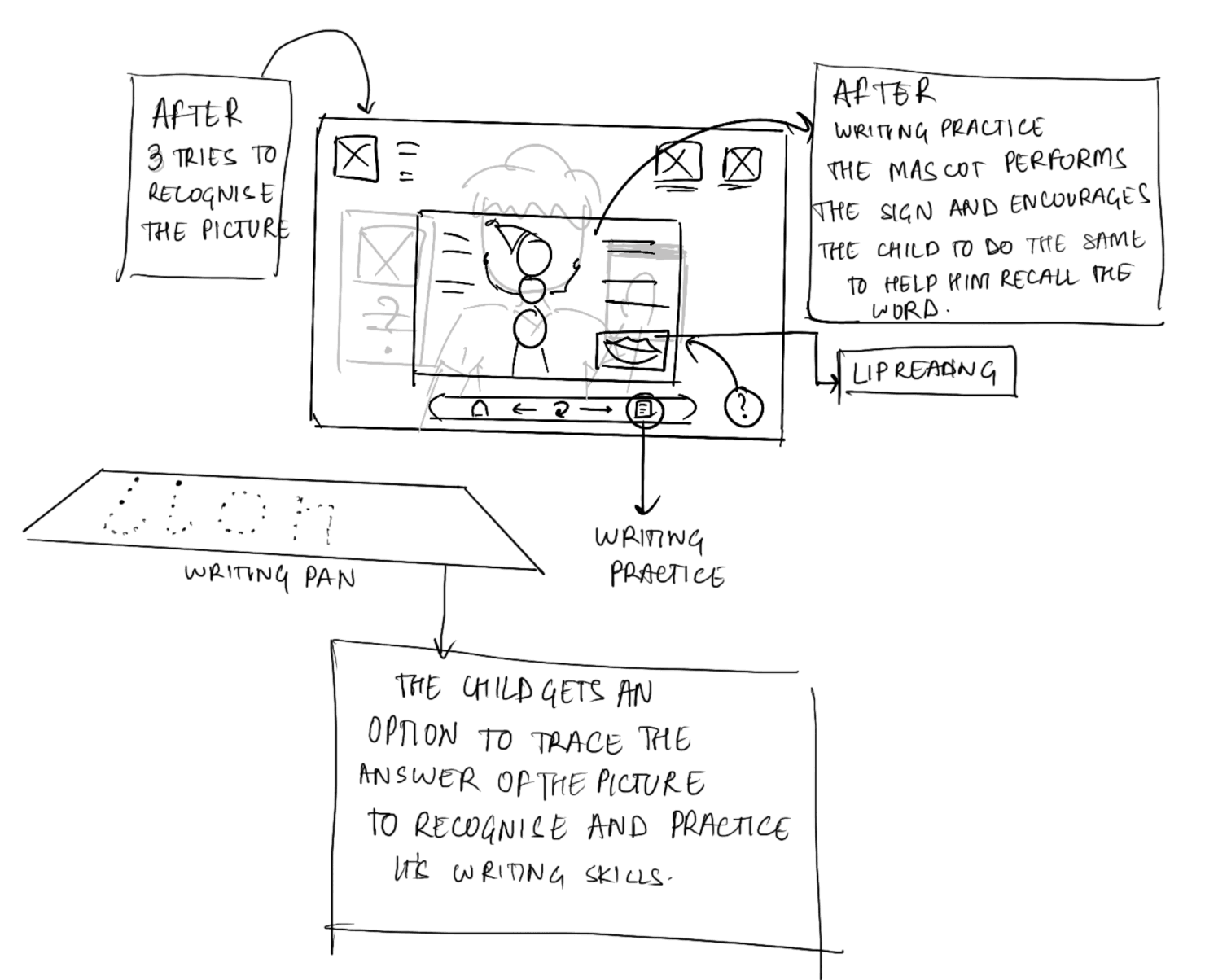
Low fidelity wireframes of the product to have a basic layout of the application for better understanding
Click To View
Branding Style Guide & High Fidelity
bringing mimic to life
Shaping MiMiC into a user-friendly platform with sign language integration, visual aids, and interactive features to support deaf student’s learning.
Colour Palette
#0286E5
MiMiC
#FF5469
#FFDF59
#7CC152
Typography
Aa
A B C D E F G H I J K L M N O P Q R S T U V W X Y Z
A B C D E F G H I J K L M N O P Q R S T U V W X Y Z
0 1 2 3 4 5 6 7 8 9
Font Name
MuseoModerno
Font Use case
Header & Sub-header for the app
Aa
A B C D E F G H I J K L M N O P Q R S T U V W X Y Z
A B C D E F G H I J K L M N O P Q R S T U V W X Y Z
0 1 2 3 4 5 6 7 8 9
Font Name
MuseoModerno
Font Use case
Body font for the app
mimic high fidelity
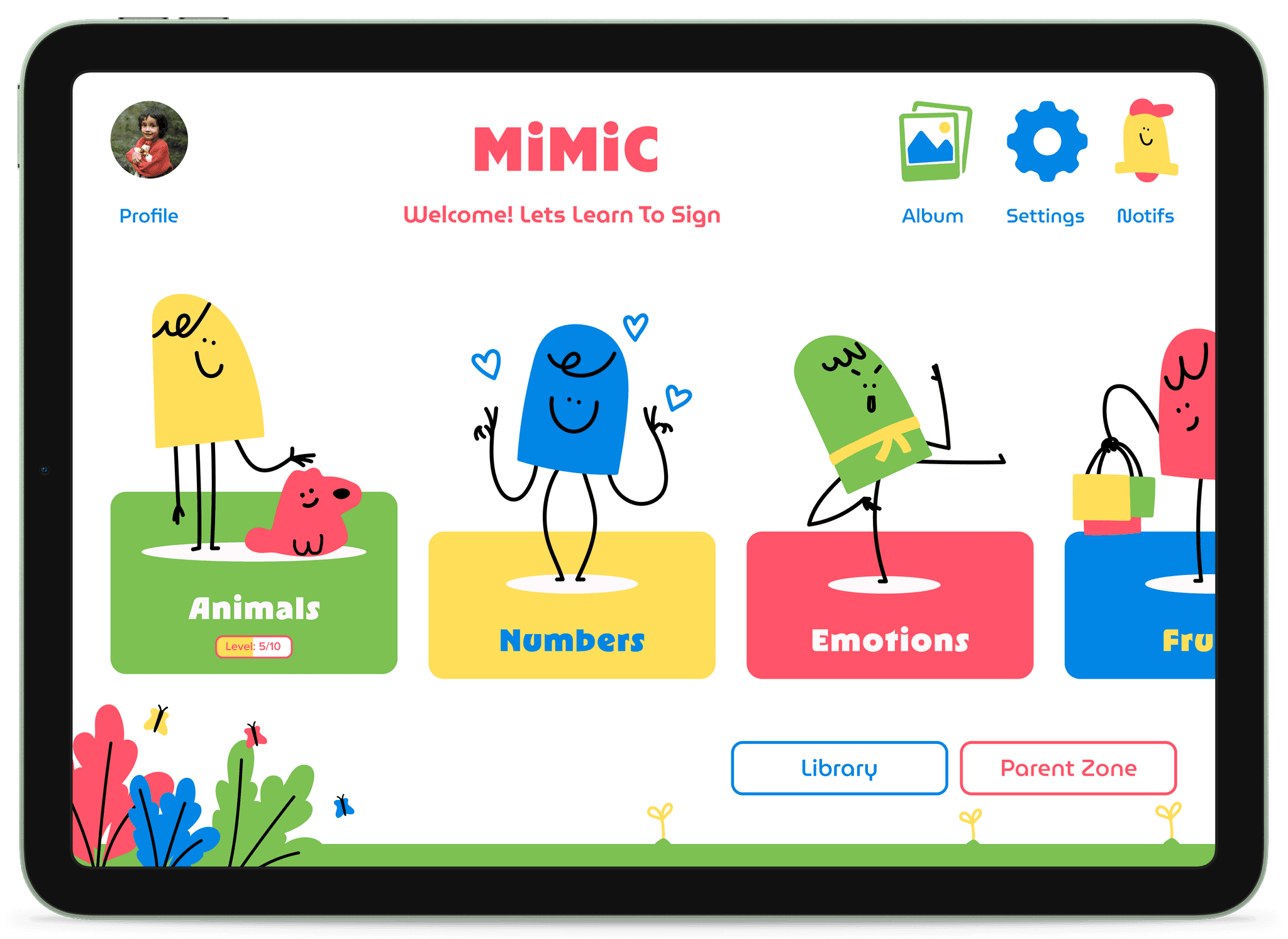
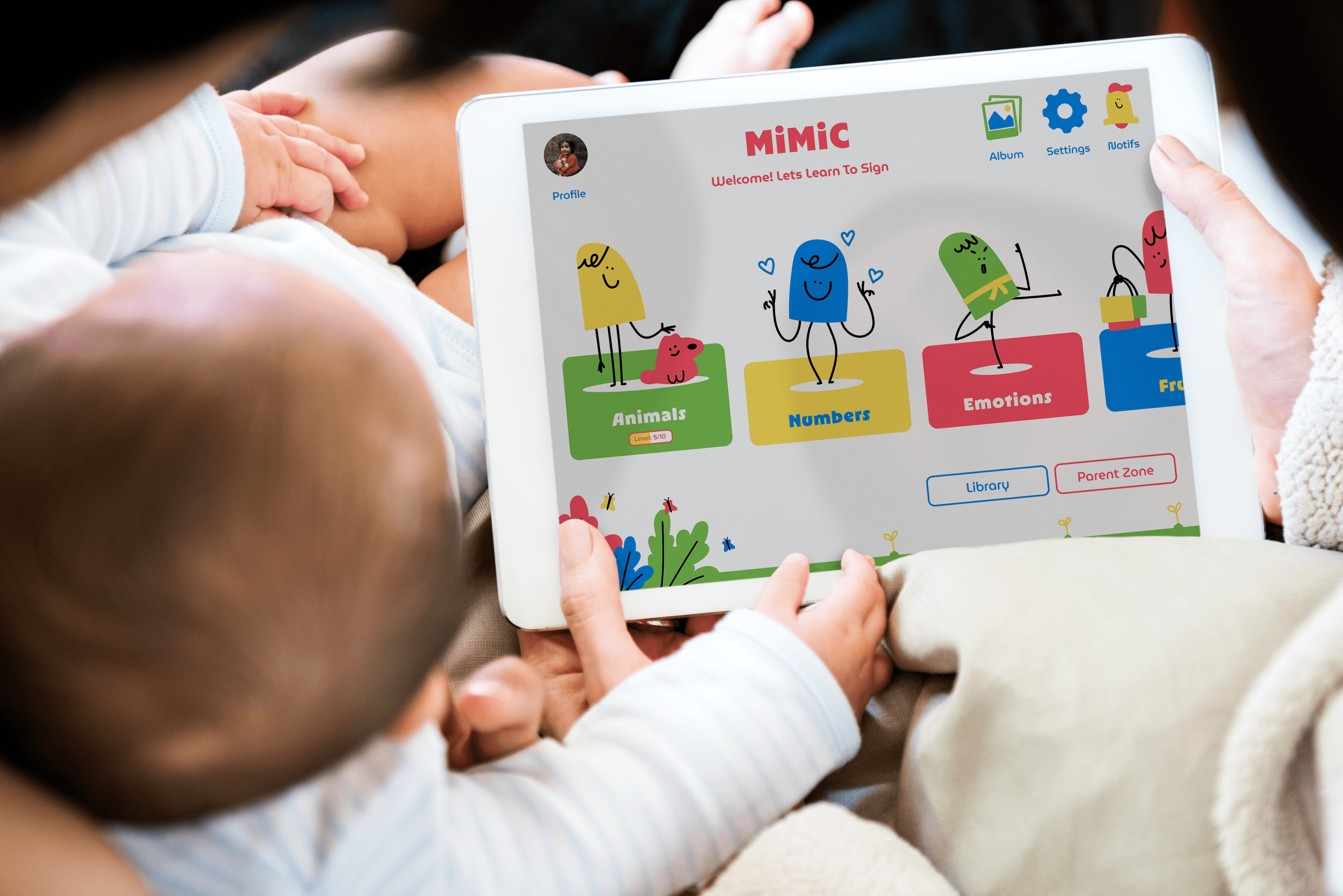
The home screen features the main subjects kids aged 2-5 will learn through sign language, keeping it simple to build a strong educational foundation. Additionally, there’s also a library for adding new subjects over time and a parent zone for tracking progress and learning.
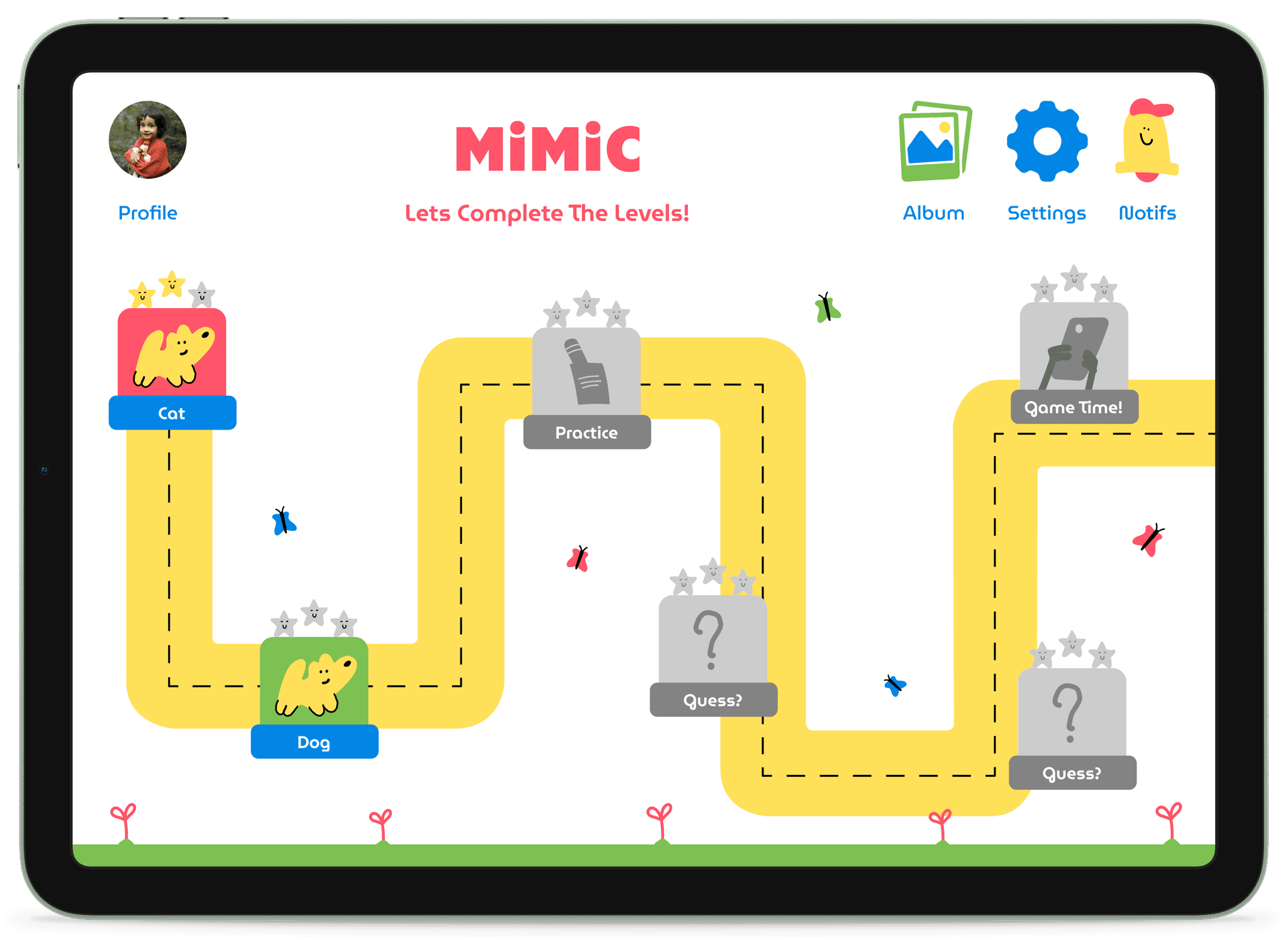
This is the levels page. After picking a subject, the child follows a step-by-step path to complete it. The gamified design keeps learning fun and engaging. The levels are structured to avoid overwhelming them while helping with memory and learning.
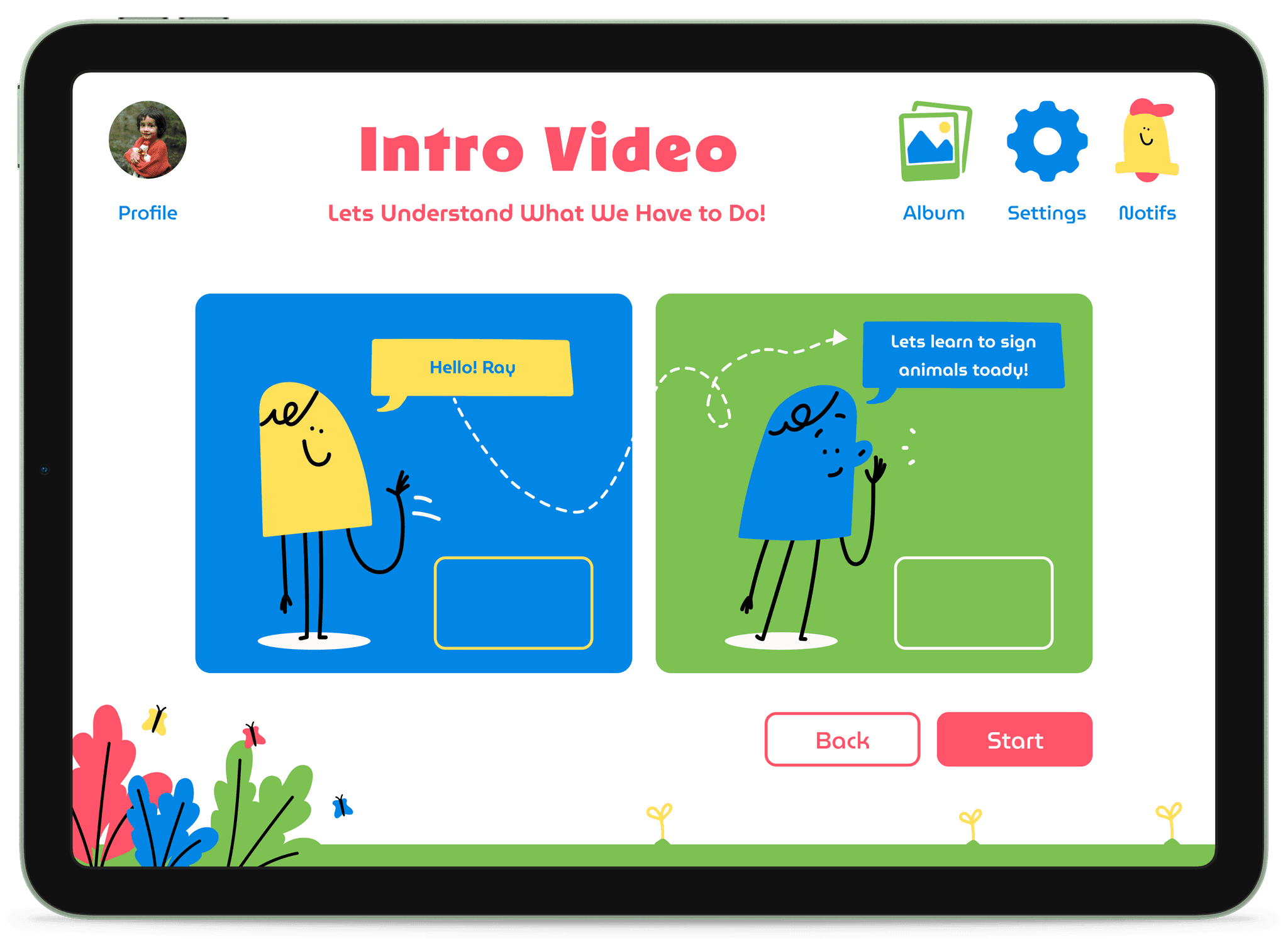
Before each level, the child watches an intro video where the characters explain the task through chat boxes and a story format. At the same time, the text is shown in sign language, making it both inclusive and a way for the child to become familiar with it.
Here's the gameplay screen where the child can see themselves through the camera, which checks if they’re signing correctly. They'll get a card based on the chosen subject, like animals here, and try to guess the image. If they guess it right, the card reveals the name and adds a fun animal filter to their face for engagement.
The child can click the camera icon to snap a picture and save it as a collectible in their album. They can also practice writing the word using the writing icon. If needed, they can ask the mentor for help or get a hint.
The child gets 3 tries to guess the correct answer using sign language. If they can't, the mentor on the right appears to demonstrate the answer and encourages the child to follow along. The camera tracks their progress to see if the child is following along or not.
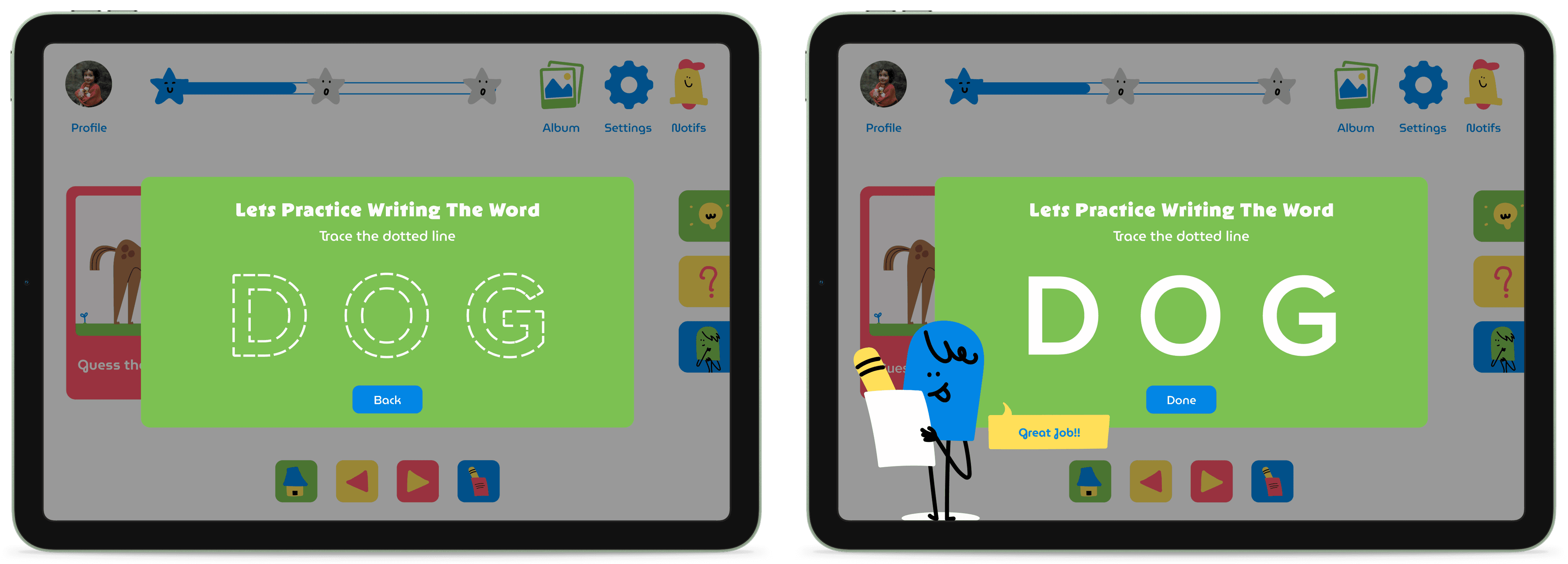
After practicing signs with the mentor, the child is guided to a writing screen. Here, they have to trace the word along a dotted line, which serves as a helpful guide. This hands-on practice not only strengthens their writing skills but also reinforces memory, making it easier to recall and recognise words.
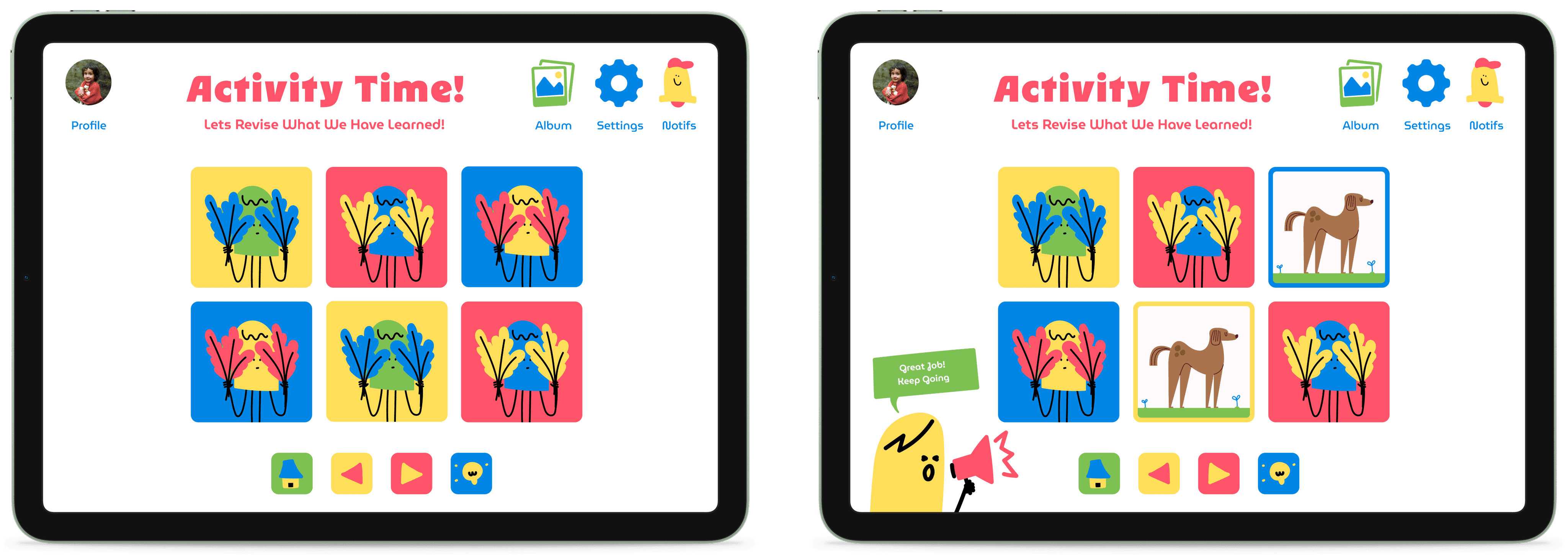
After completing three levels, the child enters the activity level, where they get to revise what they have learned in the previous level in a playful way. This not only prevents information overload but also helps reinforce their knowledge through hands-on practice, making learning enjoyable and memorable.
Key Learnings
my learnings through this project
This project journey has been an incredible rollercoaster, offering invaluable insights into the entire product development process. From in-depth research to bringing the final concept to life.
Inclusive Design
Working on a project for children with hearing impairments gave me a new outlook on accessibility. I realized how thoughtful design can bridge gaps and create inclusive experiences.
Creating Your Own Timeline
Creating my own design timeline beyond academic expectations helped me manage tasks effectively. I learned to identify areas that required extra attention and effort. However, there are still places to work on as design changes never stop.
Empathising & User Understanding
A key aspect of design is understanding users. This project gave me the opportunity to step into their shoes, explore their needs, and interpret feedback to create meaningful solutions.
In-depth Development Process
Looked through everything in depth rather than just the surface. Looked at the usability not just through digital but also a physical product perspective and making iterative decisions to refine the final outcome.
Toh ab chale
ek cup chai peene?
Mobile: +91 9867122350
Email: vrittidagliya04@gmail.com